
Commercial Roofing Systems
Commercial EPDM Roofing Systems in DFW
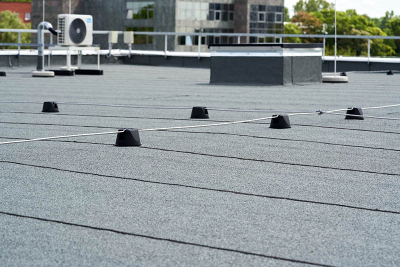
EPDM is a proven synthetic rubber roofing membrane used on commercial flat and low-slope roofs. Its flexibility, weathering resistance, large sheet sizes and repairability make it a strong option for many commercial properties.
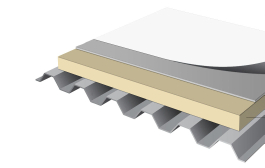
Greenleaf Roofing evaluates the complete roof assembly—including the deck, insulation, drainage, membrane, seams, flashing and rooftop equipment—to determine whether EPDM is the right system for the building.
Solving Complex Roofing Problems in DFW Since 2013
Flat and Low-Slope Roofing
What Is EPDM Roofing?
EPDM stands for ethylene propylene diene monomer. It is a thermoset synthetic rubber membrane developed for long-term exposure on flat and low-slope roofs.
Unlike TPO and PVC, EPDM seams are generally joined with manufacturer-approved primers and pressure-sensitive seam tapes instead of hot-air welding. EPDM is available in large sheets, which can reduce the number of field seams required on an appropriately designed roof.
EPDM can be installed in fully adhered, mechanically attached or ballasted assemblies. The appropriate method depends on the deck, wind-uplift requirements, building design and manufacturer specifications.
EPDM is one of several membranes we install on commercial buildings. Compare the full range on our flat and low-slope roofing page or browse all roofing products.
Membrane Advantages
Why Building Owners Choose EPDM
Long-Term Weathering Resistance
EPDM is formulated to withstand extended exposure to ultraviolet radiation, ozone and changing weather conditions.
Flexibility Through Temperature Changes
The rubber membrane remains flexible as temperatures change, helping it accommodate normal movement within the roof assembly.
Large Membrane Sheets
Certain EPDM products are manufactured in wide, long sheets. This can reduce the number of field seams, although penetrations, curbs, drains and roof transitions still require careful detailing.
Multiple System Configurations
EPDM is available in non-reinforced, reinforced, self-adhering and specialty configurations. Black, white and gray options are available from selected manufacturers.
Repairability
When the existing membrane and underlying assembly remain serviceable, isolated punctures, open seams and damaged flashing can often be repaired with compatible manufacturer-approved materials.
Membrane Configurations
EPDM Membrane and Installation Options
Black EPDM
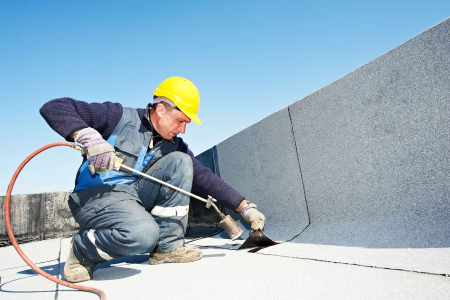
Black EPDM is the traditional configuration and has a long history of commercial roofing use. Roof insulation, HVAC loads, energy goals and the complete assembly should be considered before selecting a membrane color for a North Texas property.
White or Gray EPDM
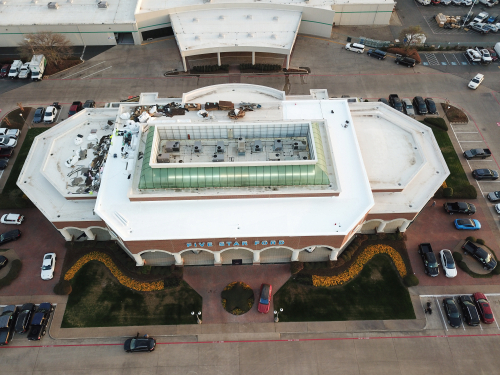
Selected manufacturers offer white, white-on-black or cool-gray EPDM for projects where a lighter-colored membrane supports the building's design or energy strategy.
Actual performance depends on insulation, HVAC efficiency, roof area, building use, climate and other factors.
Non-Reinforced EPDM
Non-reinforced EPDM offers a full thickness of rubber weathering material and is commonly used in fully adhered and ballasted systems.
Reinforced EPDM
Reinforced EPDM contains internal reinforcement for increased dimensional stability and is available for mechanically attached and fully adhered assemblies.
Self-Adhering EPDM
Self-adhering membranes arrive with factory-applied adhesive. They can reduce the amount of field-applied adhesive and installation labor when the roof and weather conditions meet the manufacturer's requirements.
Common Membrane Thicknesses
Depending on the manufacturer and product, EPDM membranes are commonly available in 45-, 60- and 90-mil configurations.
Thickness should not be selected in isolation. Reinforcement, attachment, substrate, cover board, roof traffic, flashing details and warranty requirements all affect system performance.
Established Commercial Manufacturers
EPDM Manufacturers We Evaluate
Greenleaf Roofing evaluates commercial roofing systems from established manufacturers. The final recommendation depends on project conditions, product availability, required approvals and the warranty requested by the building owner.
Versico VersiGard EPDM
Versico's VersiGard line includes reinforced and non-reinforced EPDM membranes for new construction and reroofing.
Available configurations include:
- Black EPDM
- White EPDM
- Cool-gray EPDM
- Reinforced and non-reinforced membranes
- Fully adhered, mechanically attached and ballasted assemblies
- Quick-Applied Tape and self-adhering options on selected products
- Selected 45-, 60- and 90-mil configurations
Reference: Versico VersiGard EPDM
Carlisle Sure-Seal EPDM
Carlisle's EPDM portfolio includes non-reinforced, reinforced, self-adhering and lighter-colored membrane options.
Available systems include:
- Sure-Seal black EPDM
- Sure-Tough reinforced EPDM
- Sure-White EPDM
- Sure-Seal Cool Gray EPDM
- Sure-Seal SAT self-adhering membrane
- Fully adhered, mechanically attached and ballasted assemblies
- Selected 45-, 60- and 90-mil configurations
Certain Sure-Seal sheets are available in sizes up to 50 feet wide by 200 feet long, allowing designers to reduce field seams where the roof layout permits.
Reference: Carlisle Sure-Seal EPDM
Elevate RubberGard EPDM
Elevate—formerly Firestone Building Products—manufactures RubberGard EPDM systems for commercial and institutional roofs.
Available configurations include:
- RubberGard EPDM
- RubberGard Platinum 90-mil systems
- Black and white options on selected products
- Fully adhered, mechanically attached and ballasted assemblies
- QuickSeam accessories and manufacturer-specific flashing components
- Systems designed to resist UV exposure, ozone and weathering
Reference: Elevate RubberGard Platinum EPDM
Mule-Hide EPDM
Mule-Hide offers several EPDM membrane configurations for new construction, reroofing and recover applications.
Available options include:
- Standard black EPDM
- Reinforced EPDM
- Self-adhering 60-mil EPDM
- White-on-black EPDM
- Gray EPDM
- Fully adhered, mechanically attached and ballasted options, depending on the product
- Selected 60- and 90-mil lighter-colored membranes
Reference: Mule-Hide EPDM Systems, Mule-Hide Self-Adhering EPDM
Product availability, membrane thickness, attachment method and warranty eligibility must be verified for each project.
Comparing Single-Ply Membranes
EPDM, TPO or PVC: Which System Fits the Building?
There is no single membrane that is right for every commercial roof. Greenleaf Roofing compares the building conditions and operating requirements before recommending a system.
EPDM
- Thermoset synthetic rubber membrane
- Seams joined with primer and pressure-sensitive tape
- Known for flexibility and long-term weathering resistance
- Black is traditional, with lighter-colored options available
- Large sheets can reduce field seams
TPO
- Thermoplastic membrane
- Seams are hot-air welded
- Commonly selected when a reflective white roof is a major priority
- Available in reinforced, self-adhering and fleece-backed configurations
PVC
- Thermoplastic membrane with hot-air-welded seams
- Often considered for roofs exposed to grease, oils or certain chemicals
- Frequently evaluated for restaurants, food-service properties and industrial facilities
- Chemical exposure must still be checked against the selected manufacturer's compatibility requirements
The best recommendation depends on drainage, rooftop contaminants, insulation, roof traffic, building use, wind requirements, budget and the condition of the existing roof.
Scope Options
EPDM Repair, Recover or Replacement
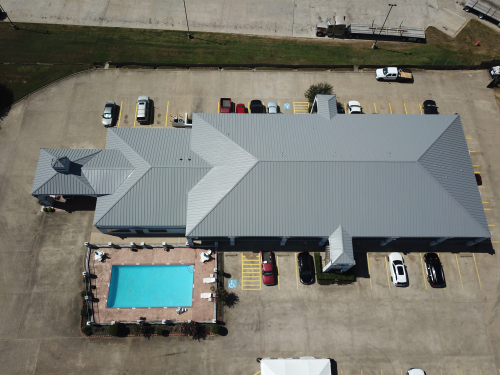
EPDM Roof Repair
Repair may be appropriate when:
- Damage is isolated
- The membrane remains generally serviceable
- Wet insulation is limited
- Seams or flashings can be restored with compatible materials
- The roof has not reached widespread failure
Potential repairs include punctures, open seams, flashing damage and localized problems around penetrations.
EPDM Roof Recover
A recover system may be considered when:
- The existing deck remains serviceable
- Moisture testing does not reveal widespread saturation
- Code allows another roof layer
- The existing assembly can accept the proposed recover system
- The manufacturer approves the configuration
A recover should never be recommended solely from a visual inspection.
EPDM Roof Replacement
Replacement may be necessary when:
- Moisture is widespread
- Insulation or decking has deteriorated
- The membrane has extensive cracking or loss of integrity
- Drainage requires significant correction
- Previous repairs are widespread
- The existing assembly cannot support an approved recover
Complete System Planning
Why Choose Greenleaf Roofing for EPDM?
Commercial roofing problems rarely begin with one isolated piece of membrane. Drainage, penetrations, seams, insulation, deck conditions and rooftop equipment all affect the system.
Greenleaf Roofing approaches EPDM projects as complete building-envelope and water-management problems.
Commercial Roof Diagnostics
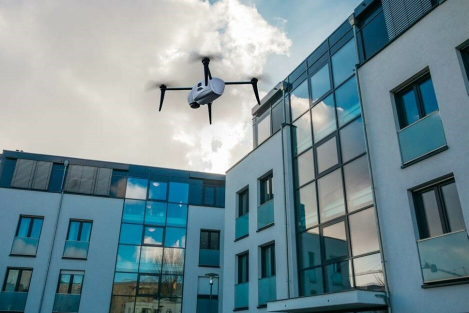
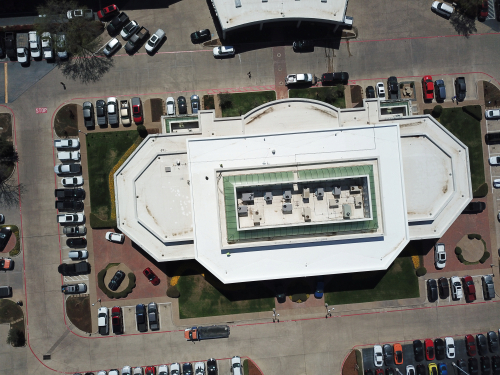
We inspect the membrane, seams, penetrations, drainage, flashings and visible signs of moisture before recommending a scope.
Manufacturer-Specific Systems
Our team evaluates complete systems from established commercial roofing manufacturers instead of combining incompatible materials.
Repair, Recover and Replacement Options
When conditions allow, we explain alternatives to complete replacement. The recommendation is based on roof conditions, testing and system requirements.
Detailed Scope Development
The proposal identifies the membrane, insulation, cover board, attachment, perimeter details, drainage work and warranty requirements included in the project.
DFW Experience
Greenleaf Roofing has been solving complex commercial roofing problems throughout DFW since 2013.
Learn more about our commercial roofing services for DFW property owners and managers.
Six Steps From Assessment to Final Documentation
Our Commercial EPDM Roofing Process
1. Roof Assessment
We inspect the existing membrane, seams, flashings, penetrations, drainage and rooftop equipment.
2. Moisture Investigation
When appropriate, we use core cuts, moisture testing or other diagnostics to evaluate the underlying assembly.
3. System Recommendation
We compare repair, recover and replacement options and identify the appropriate EPDM manufacturer and configuration.
4. Written Project Scope
The scope identifies the membrane, thickness, attachment method, insulation, cover board, flashing details and warranty requirements.
5. Professional Installation
The system is installed according to the approved scope, applicable codes and current manufacturer specifications.
6. Final Inspection and Documentation
We complete a final inspection and provide applicable project, maintenance and warranty documentation.
Common Questions From Building Owners
Frequently Asked Questions About EPDM Roofing
A properly designed, installed and maintained EPDM system can remain in service for many years.
Actual service life depends on membrane thickness, attachment, drainage, installation quality, roof traffic, maintenance and environmental exposure.
It can be, but membrane color should not be selected without considering insulation, HVAC performance, building use and energy goals. White and gray EPDM options are also available from selected manufacturers.
Generally, no. EPDM seams are typically assembled with compatible primer and pressure-sensitive seam tape. TPO and PVC seams are normally joined through hot-air welding.
No roofing membrane is hail-proof. EPDM's flexibility and available reinforced, fleece-backed and thicker configurations can provide strong impact performance, but the appropriate assembly must be selected for the property's risk and use.
Yes, many isolated punctures, seam problems and flashing failures can be repaired with compatible materials when the surrounding membrane and underlying assembly remain serviceable.
A recover may be possible after the roof has been evaluated for trapped moisture, deck condition, code restrictions and manufacturer requirements. Wet or deteriorated materials must be addressed.
It may not be the best choice where the membrane will be exposed to cooking grease, oils, animal fats, petroleum products or incompatible chemicals. A properly specified PVC system may be more suitable, but the actual exposure must be evaluated.
The answer depends on the building and system design. A thicker membrane may provide more weathering material, but reinforcement, substrate, cover board, roof traffic, attachment and flashing details are also important.
Manufacturer warranties vary by membrane, thickness, assembly, contractor authorization, roof size and inspection requirements. The applicable warranty must be confirmed during system design.
Find the Right EPDM System for Your Commercial Roof
Whether the building needs an isolated repair, a recover system or complete replacement, Greenleaf Roofing will evaluate the roof and provide a clear, system-specific recommendation.
Greenleaf Roofing — Solving Complex Roofing Problems in DFW Since 2013