
Specialized Commercial Roofing
PVC Roofing Systems for DFW Commercial Properties
Heat-welded, reinforced single-ply roofing with strong resistance to grease, chemicals, fire, punctures and severe weather.
What Is PVC Roofing?
A Reinforced Thermoplastic Membrane for Low-Slope Buildings
PVC stands for polyvinyl chloride. PVC roofing is a reinforced thermoplastic membrane used on commercial and low-slope buildings.
PVC has been used as a roofing membrane since the 1960s. Its seams and flashing components are joined using hot-air welding, creating a continuous waterproofing system.
PVC is particularly valuable on roofs exposed to grease, oils, industrial pollutants or certain chemicals.
Where PVC Makes Sense
Built for Buildings With Demanding Rooftop Exposure
PVC is commonly selected for:
- Restaurants
- Commercial kitchens
- Food-processing facilities
- Manufacturing buildings
- Airports and transportation facilities
- Laboratories
- Industrial properties
- Buildings with grease-producing exhaust
- Commercial roofs requiring specialized chemical resistance
Chemical compatibility must always be verified against the selected manufacturer's current technical data. No roofing membrane is resistant to every chemical.
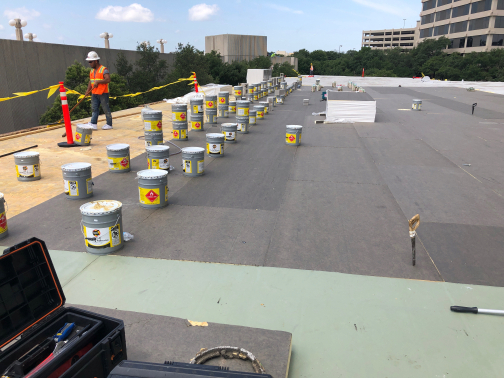
Why Choose PVC?
Welded Seams and Chemical Resistance
Grease and Chemical Resistance
PVC provides stronger resistance than many other single-ply membranes to oils, grease, animal fats, industrial pollutants and certain chemicals.
This makes it especially useful around restaurant exhaust fans and food-service equipment.
Heat-Welded Seams
PVC seams are fused using controlled hot air. Properly completed field welds create a continuous connection between membrane sheets and flashing components.
Class A Assembly Options
PVC roofing can be used in tested fire-rated assemblies. The final rating depends on the deck, insulation, cover board, membrane and attachment method.
Reflective Colors
White and other reflective PVC colors can reduce solar heat absorbed by the roof. Actual building-energy performance depends on the complete roof and HVAC system.
Reinforced Construction
A polyester reinforcing layer provides dimensional stability and allows PVC systems to be mechanically attached, fully adhered or installed using other approved methods.
Puncture Resistance
PVC is available in multiple thicknesses and fleece-backed configurations. Cover boards and walkway pads can also be added for roofs exposed to service traffic or mechanical equipment.
PVC Roof Assembly
The Membrane Is Only One Layer
A complete PVC system may include:
- Structural roof deck
- Air or vapor-control layer when required
- Polyiso or other approved insulation
- Tapered insulation for drainage
- High-density cover board
- Approved attachment system or adhesive
- Reinforced PVC or PVC-KEE membrane
- Heat-welded flashings
- Compatible coated metal
- Drains, scuppers and edge metal
- Walkway pads
Approved separation layers must be used where necessary to isolate PVC from incompatible existing materials.
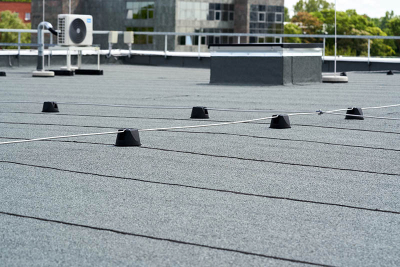
Installation Methods
Four Ways a PVC Membrane Is Secured to the Roof
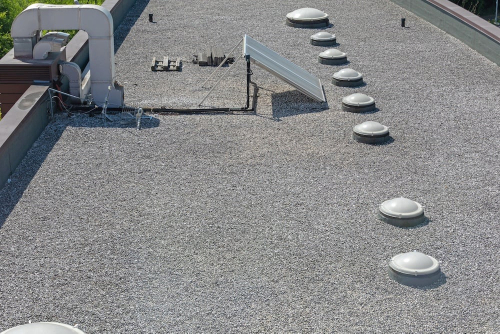
Mechanically Attached
The membrane is secured with approved plates and fasteners before adjoining sheets are heat-welded over the attachment rows.
Fully Adhered
The PVC membrane is bonded across the approved insulation or cover board. This creates a smooth roof surface with limited membrane movement.
Induction Welded
Compatible plates are mechanically fastened into the roof assembly and welded to the underside of the membrane.
Fleece-Back or Recover System
Fleece-backed PVC can be adhered over approved substrates in qualifying recover applications. Existing moisture, roof layers, deck condition, drainage and code requirements must be evaluated first.
PVC Versus TPO
Two Thermoplastic Membranes, Different Jobs
Both PVC and TPO are reinforced thermoplastic membranes with heat-welded seams and reflective options.
TPO is commonly selected for general-purpose commercial roofs where performance and system cost are the primary considerations.
PVC is often selected when the roof needs increased resistance to grease, animal fats, oils, industrial pollutants or specific chemicals.
The correct choice depends on the building's use, rooftop exhaust, existing system, budget and warranty requirements.
Read more about TPO roofing systems, or compare every low-slope membrane side by side on our flat and low-slope roofing page.
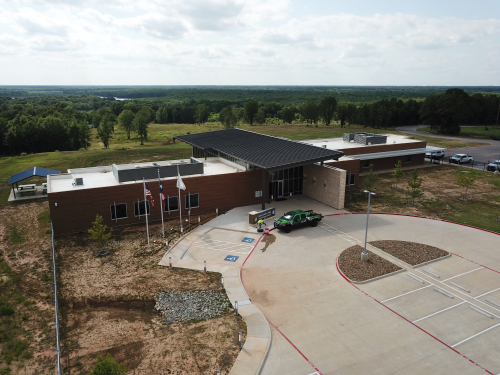
Why Greenleaf Roofing?
Low-Slope Roofing Requires Complete System Planning
Greenleaf Roofing installs and services commercial low-slope roofs throughout Dallas-Fort Worth.
Our PVC roofing process includes:
- Existing-roof assessment
- Roof-core or moisture evaluation when needed
- Chemical-exposure review
- Drainage and ponding-water evaluation
- Deck and insulation assessment
- Manufacturer and membrane selection
- Roof-assembly design
- Flashing and penetration planning
- Heat-weld testing
- Final inspection and documentation
- Manufacturer warranty coordination when applicable
Special attention is given to kitchen exhausts, grease vents, rooftop equipment, drains, curbs, walls, penetrations and membrane transitions.
Learn more about our commercial roofing services, or browse all roofing products.
Repair, Recover or Replace?
Document the Roof Before Choosing
Repair
Localized cuts, punctures, failed details or open seams may be repairable when the surrounding membrane and insulation remain serviceable.
Recover
A recover may be possible when the existing assembly is dry, stable and compatible with the new system. A separation layer or cover board may be required.
Replacement
Complete removal is generally recommended when there is widespread trapped moisture, deteriorated insulation, attachment failure, incompatible materials or damaged decking.
Frequently Asked Questions
PVC Roofing Questions
No. PVC can be used on many commercial and low-slope buildings. Its grease and chemical resistance makes it particularly useful for restaurants, kitchens and industrial facilities.
PVC is used as a waterproof roofing membrane, but performance depends on the complete installation, including welds, flashing, drainage, penetrations and edge details.
PVC-KEE uses ketone ethylene ester technology within the membrane formulation to improve long-term flexibility and performance. Product formulations and specifications vary by manufacturer.
Sometimes, but direct contact with incompatible materials must be avoided. The roof may require an approved separation layer, insulation or cover board. Existing moisture and code limitations must also be evaluated.
A reflective membrane can reduce roof-surface temperature and solar heat gain. Actual utility savings depend on insulation, HVAC efficiency, building use and other conditions.
Service life depends on product quality, membrane thickness, installation, drainage, chemical exposure, traffic, maintenance and the complete roof assembly.
Manufacturer-backed warranties may be available for qualifying systems. Coverage depends on the manufacturer, membrane, assembly, installer status and final inspection.
Choose the Membrane That Fits the Building
PVC is a strong commercial roofing option when chemical resistance, grease resistance, welded seams and long-term weatherability are important.
Greenleaf Roofing will document the existing roof and explain whether repair, recover or replacement is appropriate.